Knowing the signs your gut is unhealthy is the first step toward understanding what your body is actually asking for – and it goes far beyond bloating.
You’ve read enough to understand the principle. Symptoms are signals. The gut is the foundation. When the internal terrain shifts, the whole organism responds. That much makes sense.
But understanding the philosophy and knowing what to actually do with your specific symptoms are two different things. The next question – the one most people are sitting with after reading about gut health – is more concrete: what does a healthy gut actually require? And when mine isn’t getting those things, what does that look like specifically?
In naturopathic medicine, eating well matters – but nourishing well matters more. That requires balanced flora, regular elimination, and an intestinal environment free from the disruptions that generate toxins and overwhelm the system.
That distinction – between eating and genuinely nourishing – is where gut terrain work begins. Because the same food eaten in a compromised gut produces very different results than it does in a healthy one.
What Your Gut Actually Needs to Function Well
Before reading signs, it helps to understand what you’re reading them against. A healthy gut terrain has four foundational conditions. When any of these is absent or disrupted, the gut’s ability to nourish, protect, and regulate begins to deteriorate – and the signals begin.
New here? Start with Symptoms of Leaky Gut Syndrome.
A balanced microbial population
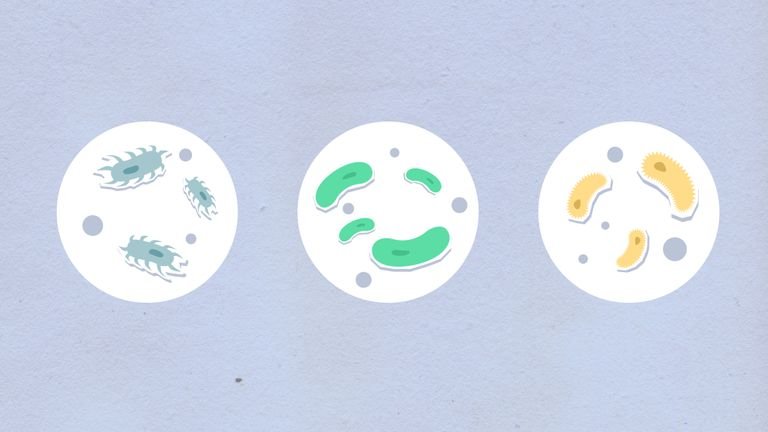
In a healthy gut, around 95% of the microbial population is composed of protective species – primarily Bacteroides and Bifidobacterium. These bacteria are not passive tenants. They synthesise vitamins the body cannot make alone, regulate immune maturation, produce the compounds that maintain the mucosal lining, and determine what crosses the intestinal barrier into the bloodstream. When this balance shifts and pathogenic species begin to dominate, the gut’s protective capacity changes in every direction at once.
Regular, complete elimination
The intestine is one of the body’s primary elimination organs. When material moves through efficiently — at least one complete bowel movement daily – metabolic waste, excess hormones, and toxins are cleared before they can be reabsorbed or cause localised inflammation. When elimination slows, the contents of the gut sit longer than they should, fermentation and putrefaction increase, the microbial balance shifts toward pathogenic species, and the lining becomes inflamed. Constipation is not a minor inconvenience. Naturopathic medicine has long considered chronic constipation one of the primary drivers of systemic toxemia.
Adequate digestive secretions
Digestion is not just what happens in the gut – it begins in the stomach. Sufficient stomach acid and pancreatic enzymes are essential for breaking down proteins and fats before they reach the intestine. When these secretions are insufficient – which becomes increasingly common with age and chronic stress – partially digested material arrives in the intestine and irritates the lining directly. Food sensitivities often trace back here: not to the food itself, but to the failure to properly process it upstream.
A mucosa that can renew itself
The intestinal lining renews itself completely every 72 hours. This constant regeneration is one of the gut’s most important protective mechanisms – but it requires specific nutritional inputs to happen well. Vitamin A, Vitamin C, zinc, Vitamin B6 and certain essential fatty acids are all directly involved in mucosal repair and integrity. When these are depleted – through poor diet, malabsorption, or chronic stress – the lining rebuilds more slowly than it breaks down. The barrier weakens gradually, often without any dramatic symptoms until the cumulative damage is substantial.
Signs your gut is unhealthy – What Each Signal Is Telling You
When these foundational conditions are compromised, the body responds with a recognisable set of signals. The key is learning to read them not as separate complaints, but as information about which condition is under the most strain.

Discover why Leaky Gut Symptoms in Women often go unrecognised.
Fermentation and gas – dysbiosis speaking
Bloating that builds through the day and is worse after carbohydrate-rich meals. Gas that feels like it comes from fermentation rather than the stomach. A sense of internal distension that is disproportionate to what you ate. Stools that are inconsistent, variable in shape, or rarely feel complete.
This pattern specifically points toward microbial imbalance. Dysbiotic bacteria thrive on refined carbohydrates and sugars, fermenting them in the gut and producing gas as a byproduct. Beneficial species, which ferment fibre into short-chain fatty acids that nourish the mucosal cells, are under-represented. The fermentation you feel is not about eating the wrong foods – it is about a terrain that has shifted so that normal foods now produce abnormal responses.
Heaviness and slow digestion – enzyme insufficiency speaking
A feeling of heaviness after meals rather than satisfaction. Food that seems to sit in the stomach for hours. Fatigue that arrives twenty to thirty minutes after eating rather than energy. Stools that sometimes contain recognisable undigested food. These are the signs of insufficient digestive secretions upstream. The problem isn’t primarily in the intestine – it’s in what arrives there. When proteins and fats aren’t adequately broken down in the stomach, the intestine receives material it cannot process cleanly.
Skin reactions – the elimination network under load
Breakouts that don’t respond to topical treatment. Eczema that flares without a clear external trigger. Dullness, patchiness, or a skin that reacts more than it used to. When these appear alongside digestive symptoms, the connection is not coincidence.
The liver, intestines, kidneys, lungs, and skin work as an integrated elimination network. When the intestine is generating excess toxins through dysbiosis or constipation, and the liver is working hard to process what crosses the mucosal barrier, the skin is frequently recruited as an overflow elimination route. This is why topical treatments suppress skin symptoms without resolving them – they address the overflow, not the source. The skin is doing exactly what it should; the question is why it needs to.
Food sensitivities multiplying – mucosal integrity shifting
Foods that were fine a year ago now cause reactions. The list of things that disagree with you is growing rather than staying stable. Reactions that are delayed – appearing hours or even a day after eating – rather than immediate.
Multiplying food sensitivities are one of the clearest signals that the intestinal barrier is becoming more permeable than it should be. When the mucosal lining is compromised, partially digested proteins that would normally be blocked are crossing into the bloodstream. The immune system encounters them as unfamiliar substances and generates responses. This is not intolerance to the food. It is a terrain condition affecting what the gut can contain. Address the terrain, and the sensitivities frequently reduce or resolve alongside it.
Fatigue and poor absorption – nourishment failing at the source
Energy that is inconsistent despite adequate sleep. Recovery from exercise or illness that takes longer than it used to. Cravings for sugar or stimulants that feel driven by genuine need rather than habit. These point to absorption failure — the gut is not extracting what the body needs from what is being eaten.
A compromised terrain disrupts absorption in multiple ways simultaneously. Dysbiosis reduces the production of certain vitamins the microbiota normally synthesises. Mucosal inflammation reduces the surface area available for absorption. Enzyme insufficiency means nutrients arrive in forms the body cannot use. The result is that you can eat well and still be functionally depleted – because nourishment depends on the terrain that processes food, not just on what you eat.
The gut’s signals are not random. Each pattern points toward a specific foundational condition under strain. Read together, they give you a clear map of where to begin.
What to Do First
Knowing which condition is speaking changes what you do about it. Rather than treating each symptom separately, you can direct support toward the terrain condition that is driving the pattern.
If fermentation and gas dominate, the priority is rebuilding the protective bacterial population. If heaviness and slow digestion dominate, the priority is upstream, supporting digestion before it reaches the intestine. If sensitivities and skin reactions dominate, the priority is mucosal repair. If constipation dominates, the priority is elimination – and it usually needs addressing first, since a sluggish gut works against every other kind of support. Fatigue and poor absorption aren’t a separate fifth condition to treat; they’re usually what any of the other three look like once nutrients stop being made or absorbed properly, so they tend to resolve as those conditions are addressed.
The full sequence – what to do first, second, and third, and why the order matters – is covered in How to Restore Gut Flora Naturally, next in this series.
See how poor gut health shows up across your whole body in Signs of Poor Gut Health.
The Observation Practice
None of this requires clinical testing to begin. The most useful first step is a two-week observation practice – tracking the five daily signals discussed in the Vital Force Balance Review: digestion after meals, elimination, energy patterns, nervous system load, and sleep quality. When these are tracked consistently, the dominant pattern becomes visible. And the dominant pattern is where to begin.
A structured version of this observation practice, with guided daily prompts and space to track your pattern over two weeks, is available as a free resource in the Viva Naturopathy library.
You don’t need to fix everything at once. You need to identify the terrain condition driving your pattern – and address that first. Everything connected to it tends to follow.
Ready to take action? How to Restore Healthy Gut Flora Naturally.