The Signal You’ve Been Missing
Your body isn’t asking for the same thing every single day of the month.
But you’ve probably been feeding it and moving it exactly the same way. Same breakfast. Same workout. Same expectations. Day 5 treated like Day 22.
Most women notice it doesn’t work like that. Some days you’re hungry at 6am; other days breakfast feels heavy. Some weeks you want to run hard; other weeks, walking feels right. Some phases you sleep like a stone; in others, your mind won’t settle.
None of this is random. It’s not weakness or inconsistency. It’s your hormones shifting – and your body’s needs shifting with them.
Cycle syncing is simply noticing those shifts and adjusting your food and movement to meet them. Not obsessively. Not restrictively. Just paying attention and responding.
New here? Start with Hormonal Imbalance in Women.
What Cycle Syncing Is NOT
It’s not four different diets in one month.
It’s not banning foods on certain days.
It’s not forcing yourself through workouts you hate because “it’s the right phase for HIIT”.
It’s not a treatment for PCOS, endometriosis, fibroids, thyroid disease or severe PMS – those need a proper evaluation.
And it’s not one more thing to feel guilty about.
Cycle syncing is this: recognising that your energy, appetite, recovery and movement preferences shift across the month – and experimenting with whether matching your habits to those shifts feels better. That’s it. That’s the whole thing.
Why Hormonal Fluctuations Actually Matter
Oestrogen and progesterone don’t only run your reproductive system. They shape:
- Energy – how your cells produce and use it
- Appetite – how hungry you actually feel
- Blood sugar – how your body handles carbohydrates
- Recovery – how quickly you bounce back
- Sleep – how deep and restorative it feels
- Mood and motivation – through their effect on brain chemistry
The question isn’t whether your body is different across the month. It is. The question is whether meeting those differences feels better. For most women, it does.
The Goal Is Pattern Recognition
Your body isn’t a machine that needs identical inputs every day.
Some women notice big swings in appetite; others barely any. Some feel stronger in certain phases; others feel the same all month. Your cycle is not your neighbour’s cycle.
So the practice is simple: notice what changes for you, then experiment. If I eat differently in this phase, do I feel better? If I move differently, does recovery come easier? You’re not looking for the perfect protocol. You’re looking for your pattern.
Important Context: Not Everyone Has a Predictable Cycle
If your cycle is irregular, unpredictable or absent, this framework is much harder to use:
- Perimenopause: phases skip or compress, and the hormonal signals are mixed.
- PCOS: ovulation may not happen regularly, so the phase pattern is disrupted.
- After birth: you may not have a cycle yet.
- Hormonal contraception: the hormones come from the pill, not your ovaries – there’s no natural cycle to sync to.
- Chronic stress: it can suppress ovulation and make your cycle unpredictable.
- Depleted reserves: your body may not make enough hormones for clear phases.
If any of these apply, the underlying issue – stress, gut, reserves, a hormonal condition – matters more right now than tracking phases. Stress, Adrenals & Your Cycle and Your Gut Determines Your Cycle are the places to start.
Menstrual Phase: Reflect & Replenish (Days 1–5)
Oestrogen and progesterone are at their lowest. Your energy is naturally lower. Your body is shedding the lining of the uterus, and it’s conserving, not expanding.
What many women notice
- Lower energy – normal, not laziness
- Appetite that varies day to day
- A pull towards rest, reflection and slower movement
- Digestive changes – looser stools for some, constipation for others
Nourishment
Iron-rich foods matter most now, especially if you bleed heavily. Many women want warm food – soups, stews, slower meals – and complex carbohydrates feel grounding. If heavy bleeding is an issue, test before you supplement iron; taking it when you don’t need it creates its own problems.
Movement
Walking, yin yoga, gentle stretching, restorative strength work – or full rest. All of it is appropriate.
Rest
Prioritise sleep. Your body needs more of it now. That’s not weakness. That’s your cycle.
Follicular Phase: Build & Expand (Days 6–13)
Oestrogen is rising, and so is your energy. Your body is primed to build. Recovery comes faster, and many women notice clearer thinking, brighter mood and more social energy.
What many women notice
- Energy climbing day by day
- Moderate or lower appetite
- Motivation for more intense movement
- Easier digestion
- More willingness to try new things
Nourishment
Many women feel satisfied with lighter meals now – fresh vegetables, lighter proteins, moderate carbohydrates. This isn’t about eating less. It’s about noticing that lighter can feel right.
Movement
This is where many women feel strongest and gravitate towards harder training – running, intervals, heavy strength work. Others feel equally strong all month. Both are normal. If you enjoy intense training, this phase is often where it feels most sustainable.
Ovulatory Phase: Express & Perform (Days 15–17)
Oestrogen peaks and the LH surge triggers ovulation. For many women, this is the best few days of the month – energy, confidence, even libido at their highest.
What many women notice
- Peak energy and strength
- More social energy and confidence
- Strong recovery
- A rise in appetite for some
Nourishment
This isn’t the time to restrict. It’s the time to fuel – protein, healthy fats, a wide variety of vegetables and carbohydrates.
Movement
Many women do their best training here. If you want to push, this is the window.
Luteal Phase: Nourish & Recover (Days 18–28)
This is the longest phase. And it’s where most women struggle.
After ovulation, progesterone rises. It warms your body, slows digestion, shifts fluid balance and calms the nervous system. Your energy needs rise slightly, and your body genuinely asks for more food, especially in the second half. As progesterone falls in the days before your period, this is also where cravings, mood changes and PMS show up.
What many women notice
- Rising appetite, especially in the second half
- Cravings – often for sugar or chocolate
- Less consistent energy
- Sleep that may become harder
- Mood shifts – irritability, anxiety or low mood for some; nothing for others
- Bloating and water retention
- Slower digestion
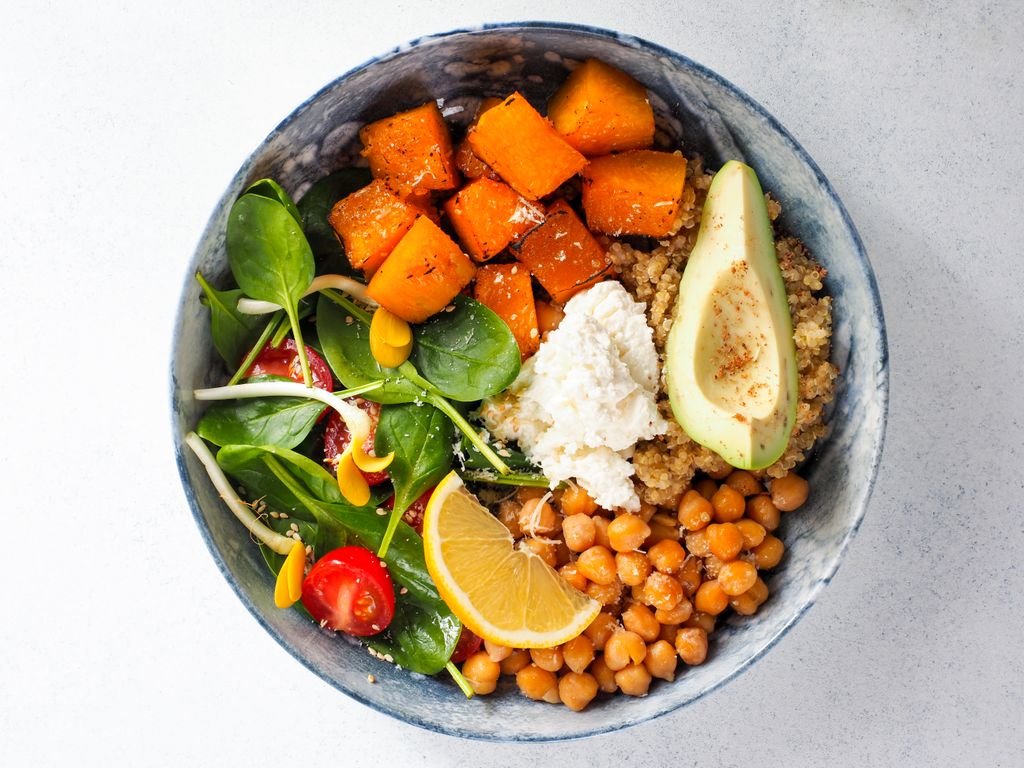
Nourishment
Your body needs more food – real food. Complex carbohydrates, healthy fats, protein, iron-rich and magnesium-rich foods. Cravings for sugar and chocolate are a classic premenstrual signal; meet the need behind them with nourishing meals rather than fighting yourself. Fibre helps too – around 25 g a day eases premenstrual discomfort.
Many women find aggressive fasting harder now. Listen to your appetite and energy; don’t force a protocol that feels like deprivation.
Movement
Recovery is slower and the same workout feels harder. Strength work, walking and lower-intensity movement often feel right. Doing less is appropriate.
Nutrient support
Two nutrients stand out in naturopathic PMS care. Vitamin B6 is central to how your body regulates its hormones and makes serotonin – and it runs low in women on the pill. Magnesium eases nervous tension, breast tenderness and premenstrual weight gain. For how they work, and how they fit with zinc and calcium, see Hormonal Imbalance in Women.
The bloating question
Luteal water retention is normal. It’s fluid, not fat, and it resolves when your period begins. Don’t restrict food to prevent it – you genuinely need the fuel.
Want to Know Your Patterns? Try the Viva Cycle Guide
Understanding the physiology is one thing. Noticing it in your own body is another.
The Viva Naturopathy Cycle Guide helps you:
- Identify where you are in your cycle right now
- See which nutrition, movement and recovery patterns tend to suit that phase
- Personalise the framework to your body, not the internet’s version
- Track what you notice and refine your approach over time
It’s free and takes about five minutes.
How to Actually Use This Framework
Cycle syncing isn’t a protocol you follow religiously. It’s an experiment you run on yourself.
- Month 1: observe. Change nothing. Notice appetite, energy, sleep, movement preferences.
- Month 2: make one small change – an extra carbohydrate portion in your luteal phase, or walking instead of intervals that week. Notice whether it feels better.
- Month 3: add another observation or adjustment. Keep it slow.
After two or three cycles, you’ll have real data about what works for your body. Not what the internet says works. What works for you.
The Honest Reality
Cycle syncing works best when your cycle is fairly predictable, your stress is manageable, your reserves are adequate and you come to it with curiosity, not perfectionism.
It works less well when you’re in perimenopause, you have PCOS or another hormonal condition, you’re under chronic stress or you’re depleted – and it’s never a treatment for a medical condition. Severe PMS, debilitating cramps or very heavy bleeding deserve a proper evaluation.
Think of cycle syncing as one piece of the hormonal picture. Combined with microbiome restoration, xenoestrogen reduction and stress management, it becomes far more powerful. On its own, with a gut, stress load or reserves that need attention, it’s rearranging the furniture while the foundation is cracked. Address the bigger issues first.
But if your cycle is fairly stable and you’re curious whether matching your habits to your rhythm feels better, this is worth trying. Meet your body where it is. Not fighting it. Not forcing it. Not obsessing over it.
What Comes Next
Cycle syncing works best on a stable foundation. If your gut needs support, start with Your Gut Determines Your Cycle. If chronic stress is disrupting your phases, Stress, Adrenals & Your Cycle explains why, and what to do. And if environmental exposures are a concern, Xenoestrogens gives you the honest picture.
Just paying attention and responding. That’s where it starts.